



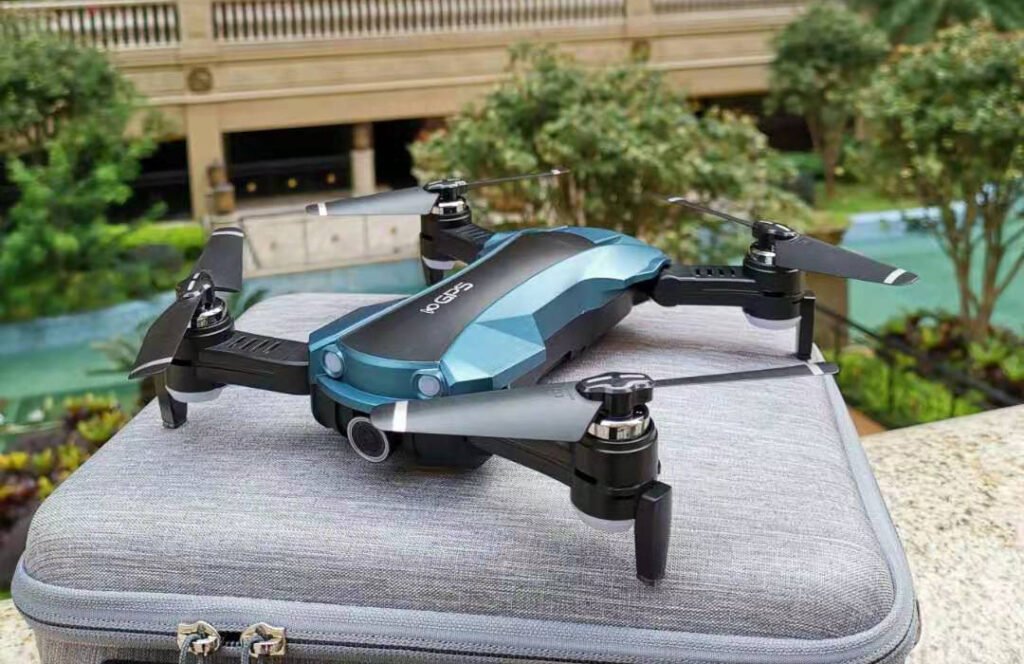
Drone manufacturing is a fascinating blend of precision engineering, advanced electronics, and efficient assembly. The process varies significantly between a major brand like DJI producing thousands of units and a small startup building custom industrial drones, but the core stages are similar.
Here’s a detailed look at the modern drone manufacturing process, from design to delivery.
Design & Engineering (The Digital Blueprint)
This is the most critical phase, where the drone is conceived and virtually tested.
-
Concept & Requirements: Defining the purpose (consumer photography, industrial inspection, delivery), key specs (flight time, payload, camera), and target cost.
-
CAD Modeling: Engineers use Computer-Aided Design (CAD) software to create 3D models of every single part: frame, arms, motor mounts, casing.
-
Simulation & Virtual Testing (CAE): Using Computer-Aided Engineering software to simulate:
-
Aerodynamics & Propulsion: How air flows, motor efficiency, propeller design.
-
Structural Analysis (FEA): Stress testing the frame under various forces (crashes, heavy payloads).
-
Thermal Management: Ensuring electronics (batteries, processors) don’t overheat.
-
-
PCB Design: The “brain” of the drone. Electronic engineers design the Printed Circuit Board (PCB) that hosts the Flight Controller, ESCs (Electronic Speed Controllers), sensors (gyroscope, accelerometer, barometer), and communication modules.
Prototyping & Testing (The Physical Proof)
Before mass production, multiple physical prototypes are built and tortured-tested.
-
Rapid Prototyping: Parts are 3D printed (for plastic) or CNC machined (for metal/plastic) in small batches for form, fit, and initial function testing.
-
“Frankenstein” Prototype: A functional but messy prototype, often using off-the-shelf components (Arduino, Pixhawk) to validate flight algorithms and basic design.
-
Engineering Validation Test (EVT): The first fully functional prototype from custom parts. Rigorously tested for flight performance, software stability, and basic durability.
-
Design Validation Test (DVT): Prototypes that match the final design and materials. Undergo extreme environmental testing (vibration, drop, temperature, humidity, EMI).
-
Regulatory Testing: Ensuring the drone complies with FCC (radio frequency), CE (EU), and other regional certifications.
Supply Chain & Sourcing (The Global Network)
No single factory makes everything. Drone companies are assemblers of globally sourced high-tech components.
-
Key Components Sourced from Specialists:
-
Motors & Propellers: Often from specialized manufacturers in China or Taiwan.
-
Batteries: Lithium-Polymer (LiPo) cells from major battery makers (e.g., Panasonic, Samsung). Battery pack assembly is a critical safety process.
-
Cameras & Gimbals: Camera sensors from Sony or Omnivision; complex gimbal assemblies require precise motor sourcing.
-
PCBAs (Printed Circuit Board Assemblies): The designed PCBs are sent to electronics manufacturing services (EMS) where automated machines (pick-and-place, reflow ovens) populate them with microchips, resistors, and capacitors.
-
-
Just-in-Time Inventory: Components are delivered to the assembly factory right before they are needed to minimize storage costs.
Mass Production & Assembly (The Factory Floor)
This is where the drone physically comes together, typically on Surface-Mount Technology (SMT) lines and assembly lines in large-scale factories (often in Shenzhen, China, the global electronics hub).
A. Electronics Assembly (The “Brains”):
-
SMT Line: Automated machines place thousands of microscopic components onto the PCB with incredible speed and precision.
-
Reflow Soldering: The board passes through an oven that melts solder, permanently attaching the components.
-
Testing & Programming: Each assembled main board is automatically tested. Firmware is flashed onto the flight controller and other chips.
B. Mechanical Assembly & Final Integration (The “Body”):
This can be a combination of automated robots and skilled human workers on a conveyor line.
-
Frame Assembly: The central frame and arms are snapped or screwed together. Vibration-damping mounts are installed.
-
Motor Installation: Brushless motors are screwed onto the arms and wired to the ESCs on the main PCB.
-
System Integration: The main PCB, GPS module, vision/sensing system, and wiring harness are installed into the frame.
-
Gimbal & Camera Attachment: The camera and stabilized gimbal are mounted and connected.
-
Shell/Casing Assembly: The plastic or composite outer shells are fitted, providing aesthetics and protection.
C. Quality Control (QC) & Testing:
Every single drone undergoes a battery of tests before boxing.
-
“Burn-in” Test: The drone is powered on and its systems are checked in a simulated environment.
-
IMU & Sensor Calibration: The inertial measurement unit is calibrated.
-
Motor & Propeller Test: Motors are spun to check for unusual vibration or noise.
-
Functional Test: Lights, buttons, camera feed, and communication with the remote controller are verified.
-
Final Visual Inspection: For any cosmetic defects.
Packaging & Logistics
-
Accessory Kitting: The drone, remote controller, batteries, cables, propellers, and manuals are placed into retail packaging.
-
Global Distribution: Boxed units are palletized and shipped via sea or air to distribution centers worldwide.
Manufacturing Variations:
-
High-Volume Consumer Drones (e.g., DJI): Highly automated, with robotic arms and advanced SMT lines. Focus is on speed, consistency, and cost-efficiency.
-
FPV Racing/Freestyle Drones: Often a “build-it-yourself” culture. Manufacturers produce individual components (frames, flight stacks, VTX), and enthusiasts source and assemble them. Some companies also sell Bind-and-Fly (BNF) models.
-
Industrial/Heavy-Lift Drones: Lower volume, more like aerospace manufacturing. Greater use of custom CNC-machined aluminum or carbon fiber composites. Assembly is more manual and meticulous.
Key Challenges in Drone Manufacturing:
-
Supply Chain Resilience: Reliance on specialized global suppliers (e.g., for chips) makes the process vulnerable to disruptions.
-
Battery Safety: LiPo batteries are volatile. Manufacturing and quality control must be flawless to prevent fire risks.
-
Thermal Management: Packing powerful electronics into a small, lightweight body requires innovative cooling solutions (heat sinks, thermal pads, airflow design).
-
Software Integration: The hardware is only as good as the software that controls it. Firmware development is a continuous, parallel process.
In essence, manufacturing a modern drone is a feat of systems engineering, bringing together advanced aerodynamics, cutting-edge electronics, intelligent software, and precision manufacturing into a single, flying device.