


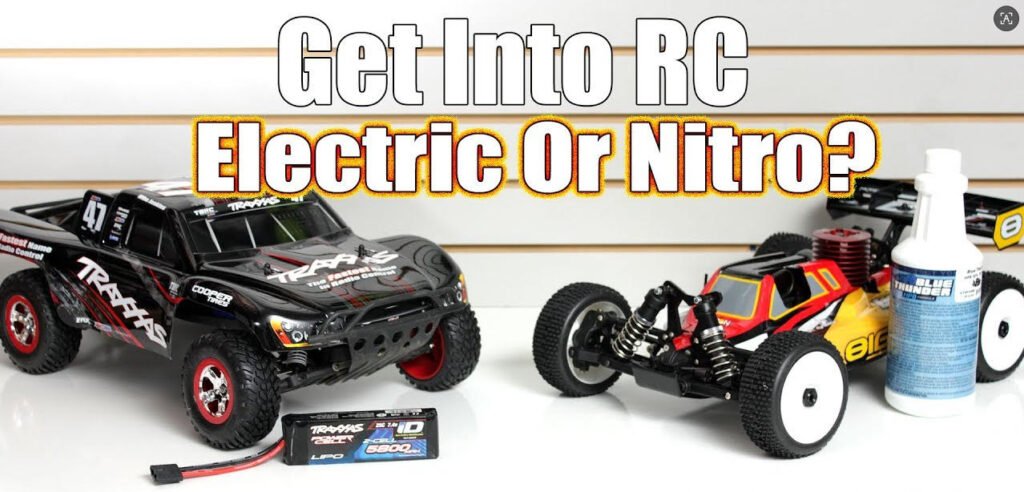
Choosing your first or next RC car comes down to a fundamental question: electric vs. nitro. This isn’t just about power—it’s about two completely different hobby experiences. Whether you value convenience and quiet power or the thrill and challenge of a real engine, this guide breaks down every aspect to help you decide. Let’s analyze electric vs nitro rc cars for beginners.
Not sure what RC means? Check out our guide on What Are RC Toys and Types.
Nitro RC Cars: In-Depth Look
Powered by rechargeable batteries (LiPo or NiMH) and an electric motor.
A good 5000mAh LiPo battery provides about 7-10 minutes of runtime in a high-powered basher.
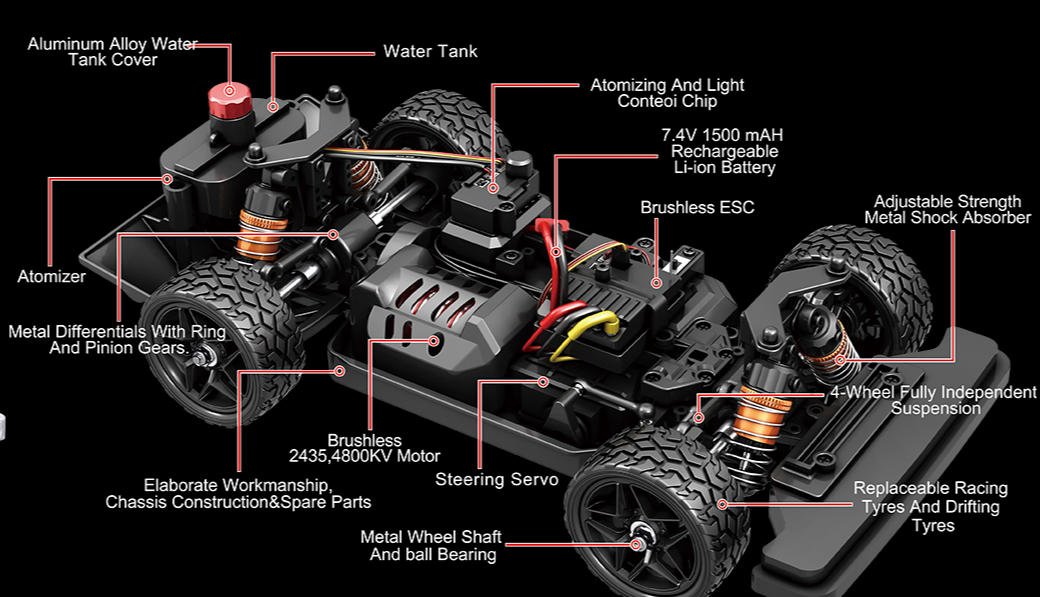
Pros of Electric RC Cars:
-
Ease of Use: The biggest advantage. “Plug and play” — charge the battery, turn it on, and go. No complicated startup procedure.
-
Quiet & Clean: Much quieter, allowing use in more places (parks, parking lots, even indoors for smaller models). No exhaust, smoke, or fuel spills.
-
Low Maintenance: No engine tuning, no cleaning of air filters or clutches. Basic maintenance involves cleaning and gear checks.
-
Instant Power & Control: Full torque from zero RPM, excellent for crawling and precise control. Brushless systems offer insane speed.
-
Convenience: Charge multiple batteries for longer run times. No need to buy fuel.
-
All-Weather: Less affected by cold weather. Can be run in light rain (with caution for electronics).
Cons of Electric RC Cars:
-
Limited Run Time: Typically 5-20 minutes per battery. You need to stop and recharge/sway, which takes time.
-
Potentially Less “Thrill” for Some: Lacks the sensory experience of engine noise, smell, and tuning.
-
Upfront Battery Cost: Good LiPo batteries and a proper charger are a significant initial investment.
-
Can Feel “Too Easy”: Some hobbyists miss the mechanical challenge.
The Verdict: Electric is the king of convenience and accessibility. For a deep dive into setting up your first electric system, read our Ultimate Guide to Your First Brushless RC System.
Nitro RC Cars: The Thrill of Internal Combustion
Powered by a miniature internal combustion engine running on special methanol-based fuel.
A typical 1/10 scale nitro buggy can run for 15-20 minutes on a 150cc tank of fuel.
Pros of Nitro RC Cars:
-
Realistic Experience: The sound, smell, smoke, and feel of a real engine. This is the main draw.
-
Longer Continuous Run: Fuel up in 30 seconds and run for 15-30 minutes on a tank. No long charging breaks.
-
Tinkerer’s Hobby: Appeals to those who enjoy tuning carburetors, adjusting clutches, and understanding engines.
-
Sound & Presence: The engine roar adds to the excitement and makes it feel more alive.
-
Refuel & Go: When you run out, you can refuel and immediately keep running.
Cons of Nitro RC Cars:
-
High Maintenance: Engines require constant tuning (affected by temperature/humidity), cleaning, and rebuilds. They can be finicky.
-
Messy & Loud: Produces exhaust, oil residue, and significant noise. Not suitable for residential areas or public parks.
-
Ongoing Cost: Fuel is expensive (~$30/gallon). You also need starter equipment, glow plugs, after-run oil, etc.
-
Steep Learning Curve: Learning to start and tune the engine properly is a skill. Can be frustrating for beginners.
-
Temperature Sensitive: Harder to start and tune in very cold or hot weather.
Electric vs. Nitro RC Cars: Direct Comparison Table
| Feature | Electric (Brushless) | Nitro |
|---|---|---|
| Power Delivery | Instant, smooth, massive torque | Builds with RPM, needs clutch engagement |
| Max Speed | Very High (easily 60+ mph) | High (50+ mph) but often less than top electric |
| Noise Level | Whirr/Hum (Quiet) | LOUD (Gas Engine Roar) |
| Run Time | 5-15 min (per battery) | 15-30 min (per tank) |
| Refuel/Recharge | 1-2 hours charge | 30 second refuel |
| Maintenance | Low (Clean, lube) | Very High (Tune, clean, rebuild) |
| Ongoing Cost | Lower (electricity) | Higher (fuel, parts) |
| Beginner Friendly | Excellent | Poor |
| “Cool Factor” | Tech/Performance | Realistic Mechanical Experience |
Which Should YOU Choose?
Choose ELECTRIC if:
-
You are a beginner or getting back into the hobby.
-
You value convenience, cleanliness, and quiet operation.
-
You want the lowest maintenance and easiest learning curve.
-
You’ll run it in public spaces or near homes.
-
You want the absolute highest top speeds (with high-end brushless setups).
Choose NITRO if:
-
You are mechanically inclined and enjoy tinkering.
-
The sensory experience (sound, smell, tuning) is a major part of the appeal.
-
You want longer continuous run times without long breaks.
-
You have a dedicated, noise-tolerant space like a RC track or open field.
-
You’re drawn to the challenge and realism of a real engine.
FAQ: Electric vs. Nitro RC Cars
Q: As a complete beginner, should I always choose electric?
A: For about 95% of first-time buyers, yes. Electric RC cars (especially RTR – Ready-to-Run models) let you focus on driving and having fun immediately, without the steep learning curve of engine tuning and maintenance.
Q: Are nitro RC cars faster than electric?
A: Not necessarily. While nitro cars are fast, high-end brushless electric systems currently hold the top speed records in most RC classes. Electric offers instant torque, while nitro provides a different kind of power band and experience.
Q: What about gasoline (petrol) RC cars?
A: Gasoline cars, typically in 1/5 scale, are a third option. They are louder than electric but often more reliable and cheaper to run than nitro. They fit a niche between the two, ideal for large-scale off-road bashing. Brands like Losi and HPI are major players in this scale.
Conclusion
-
For 95% of beginners and most casual hobbyists, electric is the clear and recommended choice. We strongly recommend starting with a proven, durable model from our list of Best RC Cars for Absolute Beginners. Modern brushless electric systems are incredibly powerful, reliable, and hassle-free.
-
Nitro is a niche, enthusiast passion. It’s for the hobbyist who loves the engine as much as driving. It’s a rewarding challenge, but be prepared for the work and cost.
Bonus Note: Gasoline (Gas/Petrol): Larger scale RC (1/5 scale) often uses gasoline engines. They are louder than electric but more reliable and cheaper to run than nitro. They sit in a middle ground.
Start with electric. If you later crave more realism and a project, you can always try nitro as a second vehicle. The hobby largely trends toward electric due to its performance and convenience, but nitro holds a special place for its unique charm.
**What do you prefer: the silent punch of electric or the raw thrill of nitro? Share your thoughts in the comments below!**